
Attic mold removal in Memphis typically runs $1,500–$5,000: contained cleaning of colonized sheathing plus the ventilation, vent-termination, and duct fixes that stop recurrence. In the 1950s–80s stock, attic mold is usually an airflow failure with an aging-ductwork accomplice.
How mid-century attics grow mold, what the streaks mean, and the fix that lasts.
The mid-century attic, thermodynamically
A vented attic breathes outdoor air — soffits in, ridge or gable out — and in Memphis that air runs humid most of the year. The system works as long as air keeps moving; the mid-century stock gives it two ways to fail. First, ventilation built to 1960s standards: undersized exhaust, gable vents painted shut across the decades, soffit bays blocked by retrofitted insulation. Second, the era’s shortcuts — bath and dryer vents terminating in the attic, feeding indoor moisture to the coldest surfaces nightly. Stalled humid air condenses on the sheathing, and the colonies map the failure precisely: heaviest where air stops, darkest on the cool north slope.

Reading the streaks
| Pattern | What it usually means | The fix |
|---|---|---|
| Uniform haze across the deck | General ventilation shortfall | Clear soffits, open the exhaust path |
| Dark bloom around one spot | A vent terminating in the attic | Re-route outdoors; clean the bloom |
| North-slope concentration | Condensation on the coolest surface | Airflow correction; treat the sheathing |
| Wet insulation along a duct run | Aging duct sweating or leaking | Seal or replace the run — see duct cleanup |
| Soft wood under the growth | Rot — past cosmetic | Sheathing replacement in that zone |
The remediation, in order
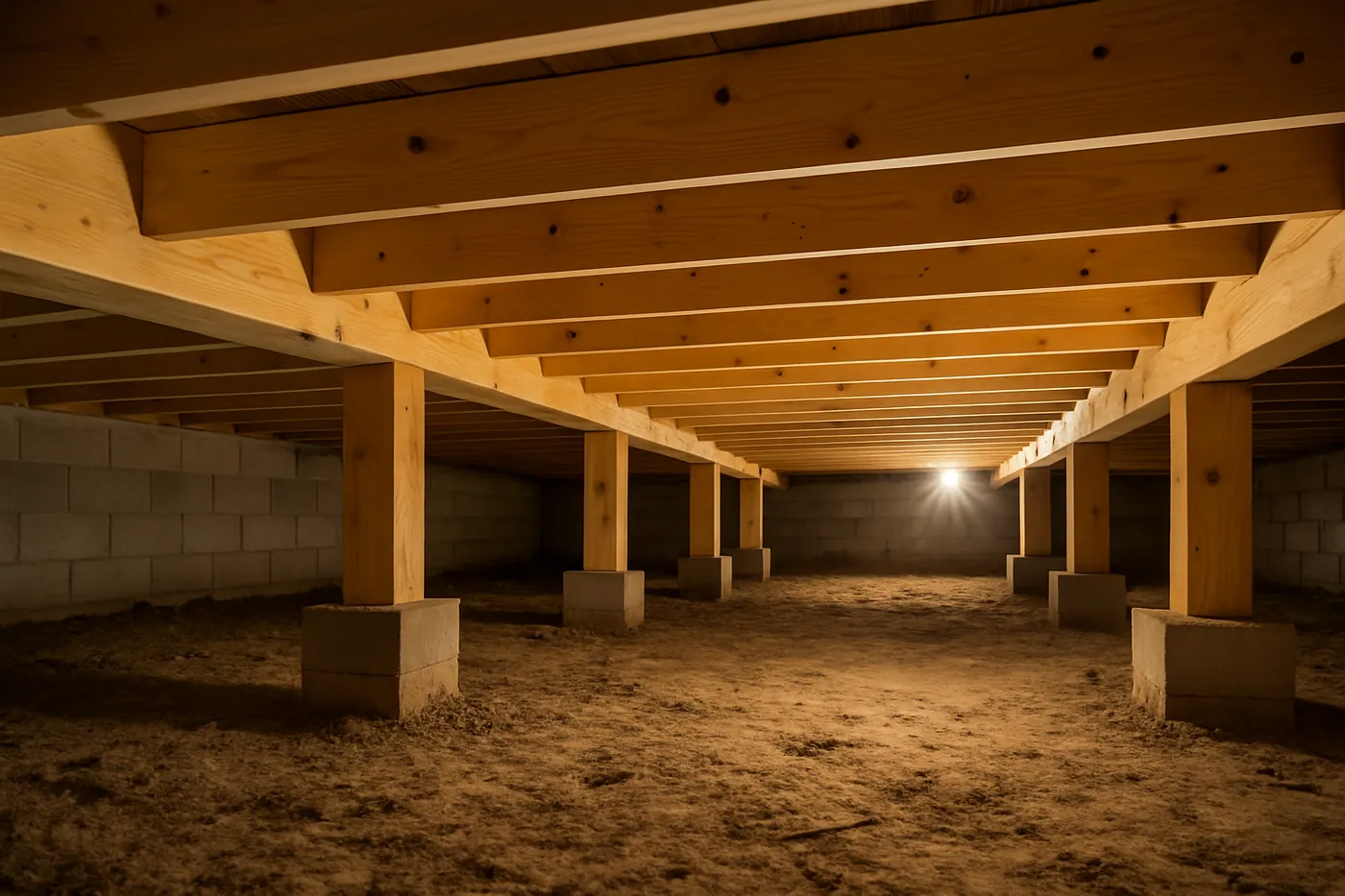
Containment at the hatch and ceiling penetrations, so the work never seeds the house. HEPA-assisted cleaning and treatment of colonized sheathing; probing for rot, replacing only what genuinely failed. Then the corrections that decide recurrence: soffit bays cleared, the exhaust path opened or added, every bath and dryer vent terminated outdoors, and the aging duct runs sealed or replaced where they contribute moisture. Where the story continues below — the crawl space breathing the same humidity under the floor — both spaces get read as one system, because in this stock they usually are. Verification follows the work; the cost guide prices each layer, and testing is available where a closing or dispute needs numbers.
The first winter after the work
A corrected attic proves itself in the season that caused the trouble, so check it once in deep winter rather than on a mild day. The sheathing should be uniformly dry with no frost or damp sheen on the nail points, the new insulation should sit undisturbed, and air should be moving from the soffits toward the ridge. Then look for the things that quietly undo it, which are nearly always human: a bath fan re-aimed into the attic during a remodel, a hatch or can light left unsealed, boxes stacked over the soffit vents. In mid-century Memphis stock, add one more — if ductwork runs up there, check that repairs or replacements left every joint sealed and the insulation intact.
Attic questions, straight answers
How does mold get into a Memphis attic?
Two feeds, often together. Humid outdoor air enters by design through soffits, and when the exhaust path is blocked — common under 1960s-era ventilation — that moisture lingers and condenses on the roof sheathing overnight. And bath or dryer vents terminating in the attic instead of outdoors, a frequent mid-century shortcut, deliver indoor moisture straight to the coldest surfaces.
What are the dark streaks on my sheathing?
Surface mold tracking the moisture pattern — heaviest where airflow stalls, darkest on the north slope, following the plywood seams. It's a map of the ventilation failure. Streaking that's cosmetic differs from rot that's softened the wood; a screwdriver probe during inspection separates them, and the answer changes the scope.
Does the aging ductwork make attic mold worse?
Often, yes. Mid-century Memphis attics commonly carry duct runs from a system two service lives ago — leaking conditioned air that meets attic heat, sweating on their skins in humid months, and wetting the insulation they cross. A duct contributing moisture to the attic gets fixed with the ventilation, or the streaks return; that work pairs with our duct cleanup service.
Can attic mold be fixed without touching the roof?
Almost always. Remediation works from inside: contained cleaning and treatment of the sheathing, replacement only where wood genuinely rotted, then the corrections — soffit bays cleared, exhaust opened, every vent terminated outdoors, duct runs sealed. Roof replacement enters only when sheathing has structurally failed, which is a carpentry question, not a mold one.
What does attic mold removal cost in Memphis?
Most attic remediations land $1,500-$5,000 depending on square footage and how much correction the ventilation and ducts need — the cleaning is often the smaller half of the invoice. The fix-the-cause line matters most: treated sheathing under unchanged airflow streaks again within seasons.
Do we need to leave the house during attic remediation?
Usually not. Attic work is contained and run under negative air pressure so the work zone stays separate from the living space, and access is typically through a hatch rather than your hallway. You will hear it, and you will see plastic and equipment. Households with infants, elderly residents, or anyone asthmatic or immunocompromised sometimes choose to stay elsewhere for the heaviest day.
Book a Memphis mold inspection
Tell us what you're seeing — spots on a wall, a musty room, a leak that got away — and we'll schedule an inspection with photos and moisture readings. Active water gets priority scheduling.